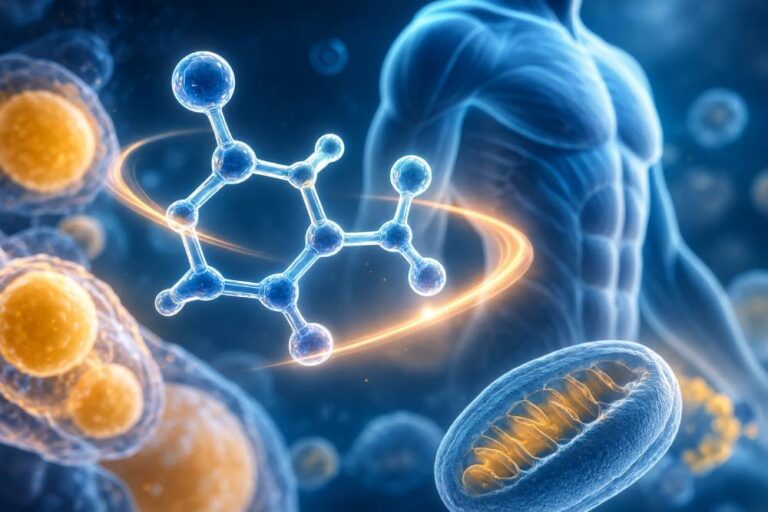
You can survive weeks without food and days without water. Without oxygen, you have minutes. That single fact tells you almost everything you need to know about how central this molecule is to human life — yet most people never think about oxygen beyond “breathing in, breathing out.”
At a cellular level, oxygen isn’t just something you consume. It’s the final electron acceptor in the chemical reaction that keeps every one of your cells alive. When oxygen delivery or utilization drops — even modestly, even without you noticing — the effects ripple through your brain, your liver, your muscles, and your immune system. This article breaks down the physiology, with sources from peer-reviewed journals and major medical references throughout.
1. The Basic Biology: Why Cells Need Oxygen At All
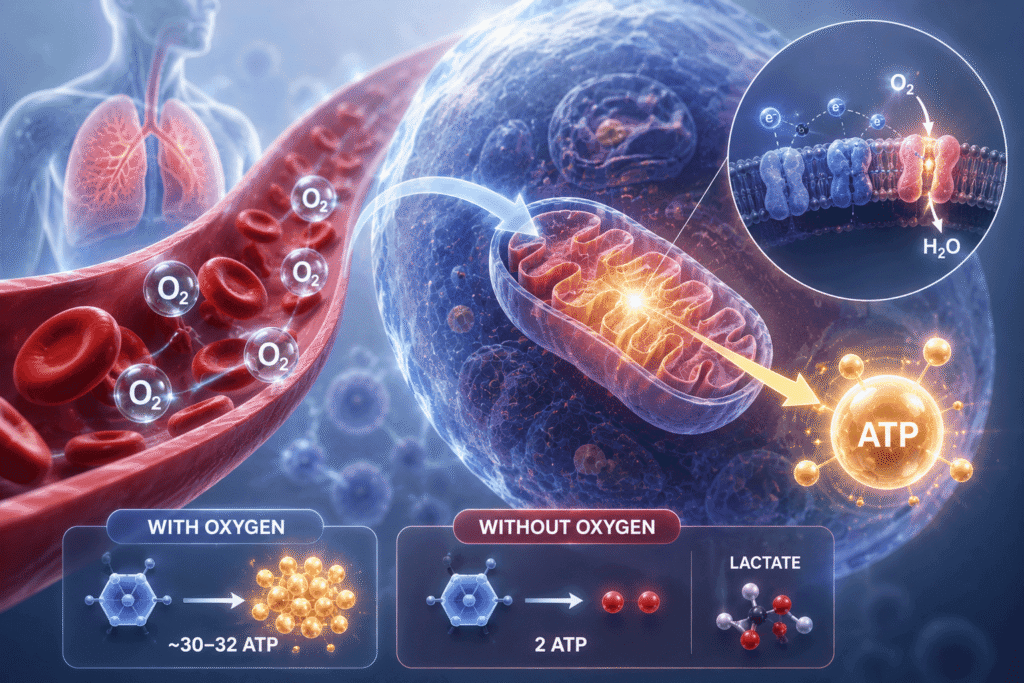
Every cell in your body runs on a molecule called ATP (adenosine triphosphate) — the universal energy currency of biology. Cells produce most of their ATP through oxidative phosphorylation, a mitochondrial process in which oxygen serves as the final electron acceptor in the electron transport chain (NCBI StatPearls: Biochemistry, Anaerobic Glycolysis).
The efficiency difference between oxygen-dependent and oxygen-independent metabolism is dramatic: one glucose molecule yields roughly 30–32 ATP through oxidative phosphorylation, compared with only 2 ATP through anaerobic glycolysis — about 15 times less energy from the same fuel (NCBI StatPearls; a detailed reassessment of the theoretical maximum yield puts the number as high as ~33.45 ATP per glucose, published in the Journal of Biological Chemistry).
In practice, this means:
- Oxygen-rich cells produce abundant, efficient energy and can sustain complex, energy-hungry functions.
- Oxygen-starved cells are forced into a low-efficiency backup pathway (anaerobic glycolysis), which also generates lactate as a byproduct.
This is why oxygen delivery — via the lungs, red blood cells, and circulatory system — and oxygen utilization at the cellular level are both critical to health.
2. Oxygen and the Brain: The Body’s Biggest Energy Consumer
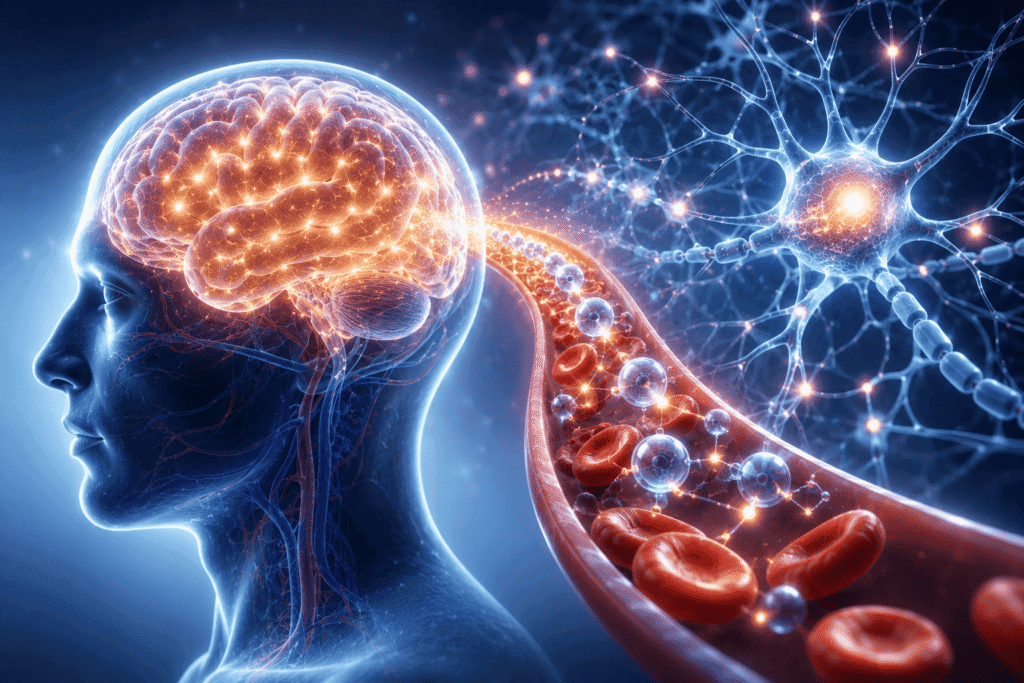
The brain makes up about 2% of body weight but consumes roughly 20% of the body’s oxygen supply at rest, a disproportion well documented in the neuroscience literature (Brain Energy and Oxygen Metabolism, PMC / Frontiers; ScienceDirect: Brain Oxygen Consumption overview). Of the oxygen the brain uses, an estimated 75–80% goes toward fueling the electrical signaling of neurons themselves (PMC6023993).
What happens when brain oxygen supply drops:
- Even brief interruptions matter. Clinical references note that brain function begins to decline within 5–15 minutes without adequate oxygen delivery (ScienceDirect: Brain Oxygen Consumption overview).
- Disease associations. Disruptions in cerebral oxygen and glucose metabolism have been observed in Alzheimer’s disease, Parkinson’s disease, and several other neurodegenerative conditions, though researchers are still working out the direction and mechanism of these relationships (MRI estimation of global brain oxygen consumption rate, PMC).
- Vulnerability during development. In infants, hypoxic-ischemic injury to the brain has a distinct pattern tied to how the developing cerebral vasculature responds to poor perfusion (PMC3493883).
The takeaway: your brain’s clarity and long-term function are tightly coupled to how efficiently oxygen reaches and is used by brain tissue.
3. Oxygen and the Liver: Setting the Record Straight on “Detox”
This is where marketing claims and biochemistry often part ways, so let’s be precise, using the actual liver physiology literature.
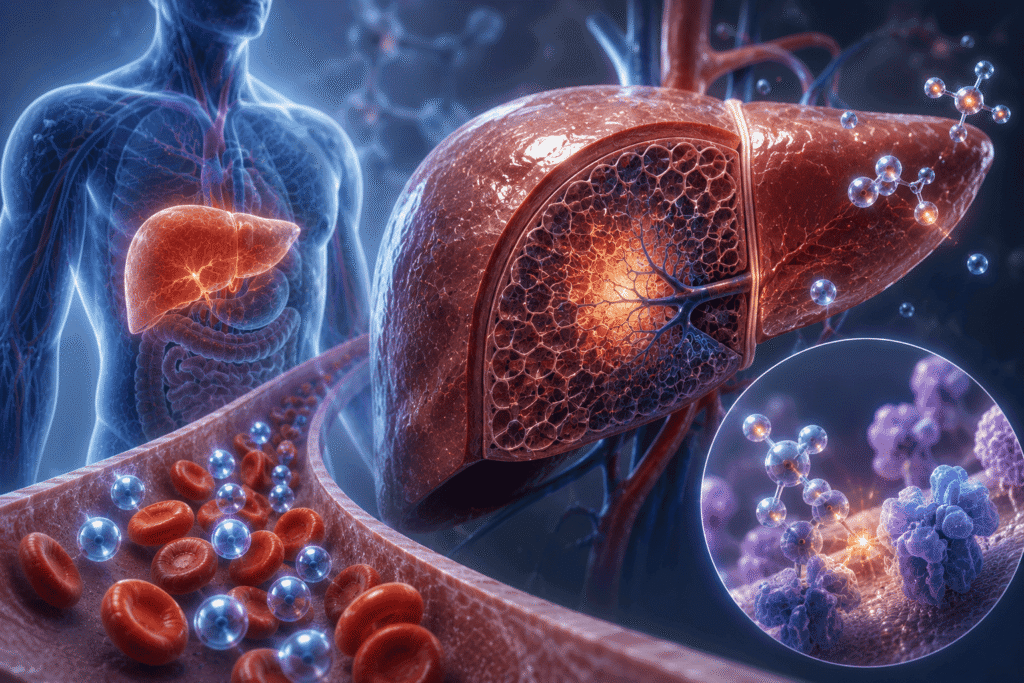
What the liver does for detoxification: The liver neutralizes toxins, drugs, and metabolic waste largely through cytochrome P450 (CYP) enzymes, which catalyze oxidative reactions by transferring electrons from a toxin directly onto molecular oxygen — meaning many of the liver’s core detox reactions are, chemically, oxygen-consuming reactions (Zonation, Zonation, Zonation: The Real Estate of the Liver, PMC).
The liver’s oxygen gradient (zonation): The liver isn’t uniformly oxygenated. Blood flows from the portal tract (highest oxygen) toward the central vein (lowest oxygen), creating three functional zones. Interestingly, most CYP detox enzymes are concentrated in the pericentral zone — the zone with the lowest oxygen tension — where they handle glycolysis, lipogenesis, and the bulk of drug/xenobiotic metabolism (Frontiers in Pharmacology, 2024; Metabolic zonation of the liver: the oxygen gradient revisited, ScienceDirect).
Why this makes the liver’s detox machinery oxygen-sensitive: Because the pericentral zone already operates at the low end of the liver’s oxygen supply, it is disproportionately vulnerable when blood flow or blood oxygen content drops. This is precisely the tissue pattern seen in ischemic hepatitis (also called “hypoxic hepatitis” or shock liver): centrilobular (pericentral) hepatocyte necrosis driven by reduced hepatic blood flow or reduced blood oxygen content (Ischemic Hepatitis, PMC/NIH; Ischemic Hepatitis – Intercorrelated Pathology, PMC). This same zone is also the classic site of injury in drug-induced and toxin-induced liver damage, including acetaminophen overdose (Patterns of necrosis in liver disease, PMC/NIH).
So is it accurate to say “oxygen helps the liver detox”? Yes, in the sense that adequate oxygen delivery is necessary infrastructure for the liver’s detoxification enzymes to function, and the zone doing most of that enzymatic work is also the zone most vulnerable to oxygen shortfalls. It would be inaccurate, however, to say that oxygen itself “flushes out” toxins the way a wellness marketing claim might suggest. Detoxification is a multi-step enzymatic process (the well-established Phase I/Phase II pathway); oxygen is a critical input to that machinery, not a substitute for it.
4. Oxygen and the Rest of the Body
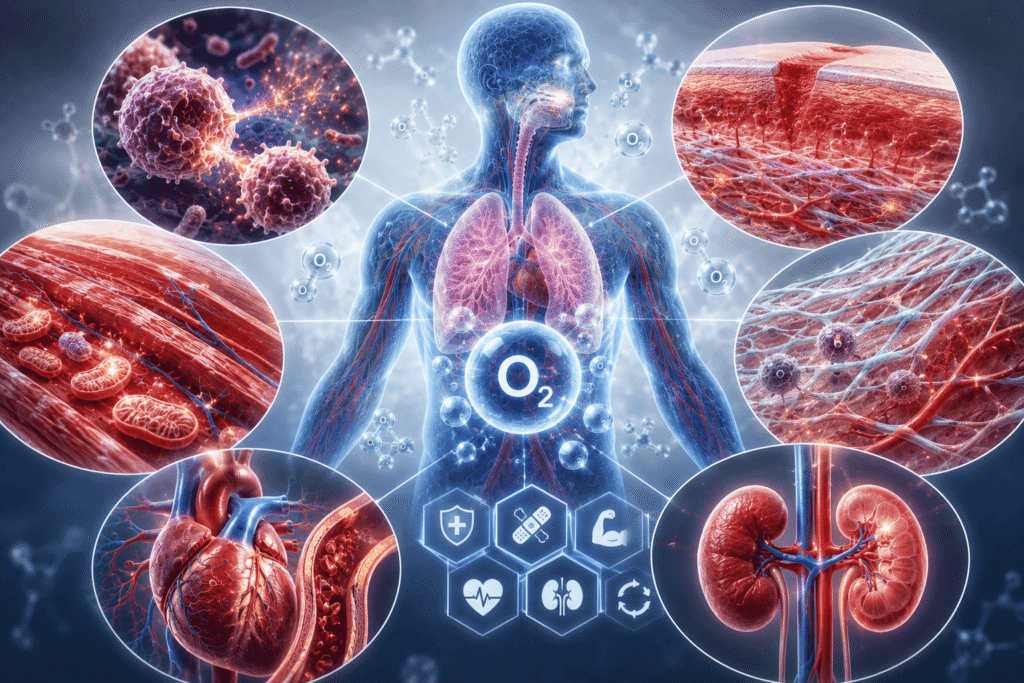
Immune function
Oxygen is required for the “respiratory burst” (also called the oxidative burst), the process by which neutrophils and macrophages generate reactive oxygen species to kill invading pathogens (The Role of Oxygen in Wound Healing, Human BioSciences). Research on oxygen-generating wound dressings notes that the degree of superoxide production by white blood cells — a key pathogen-killing mechanism — is critically dependent on tissue oxygen levels (USPTO patent literature review of wound-healing biomaterials).
Wound healing and tissue repair
Oxygen is required at essentially every stage of wound healing: inflammation, angiogenesis (new blood vessel formation), fibroblast activity, and collagen synthesis (Topical Oxygen Therapy in Wound Healing: A Narrative Review; Nature Index: Oxygen Therapy Applications in Wound Healing). Mechanistically, oxygen is required for the hydroxylation of proline and lysine — a chemical step that is essential for producing stable collagen — so hypoxic tissue directly impairs collagen production and slows healing (The Science Behind Collagen: How It Impacts Wound Healing).
Muscles and exercise capacity
Regular exercise training increases both mitochondrial density and capillary density in skeletal muscle, largely through the PGC-1α signaling pathway — meaning trained muscle becomes more efficient at extracting and using oxygen (PLOS One: PGC-1α-b increases exercise capacity and peak oxygen uptake; Effects of Exercise Training on Mitochondrial and Capillary Growth, systematic review, PMC). A 2025 systematic review and meta-analysis of randomized trials confirmed that endurance exercise reliably increases PGC-1α expression, a key driver of this adaptation (PubMed, 2025).
Heart, kidneys, and metabolic health
Chronic intermittent drops in blood oxygen — the hallmark of obstructive sleep apnea (OSA) — are associated with oxidative stress, systemic inflammation, and endothelial dysfunction, and are linked to elevated risk of hypertension, arrhythmia, heart failure, and atherosclerosis (Cardiovascular Implications of Intermittent Hypoxia, comprehensive narrative review, PMC; Impact of Obstructive Sleep Apnea on Cardiovascular Health: A Systematic Review, PMC). The same intermittent-hypoxia pattern has been shown, in animal models, to cause measurable histological kidney damage (PLOS ONE / PMC5794148), and OSA is independently associated with increased risk of chronic kidney disease in human studies (PMC8006954).
5. What Actually Causes Low Oxygen Efficiency?
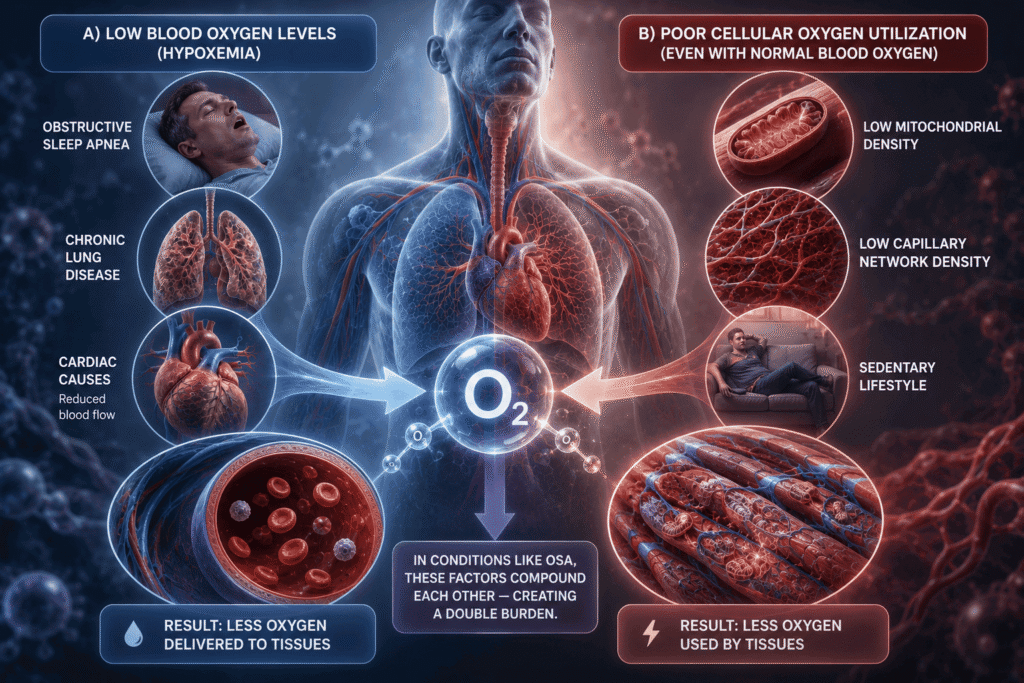
It’s worth separating two different problems:
A) Low blood oxygen levels (hypoxemia)
Documented causes in the medical literature include obstructive sleep apnea (PMC11575733), chronic lung disease, and reduced hepatic or systemic blood flow from cardiac causes (PMC5972787).
B) Poor cellular oxygen utilization (even with normal blood oxygen)
This is influenced by mitochondrial density and capillary network density in tissue — both of which decline with a sedentary lifestyle and can be rebuilt through consistent aerobic exercise training (PMC11787188; PMC3404101).
Both pathways matter, and in conditions like OSA they often compound each other — chronic intermittent hypoxia plus a sedentary lifestyle represents a double burden on the body’s oxygen-delivery and oxygen-use systems.
6. The Bottom Line
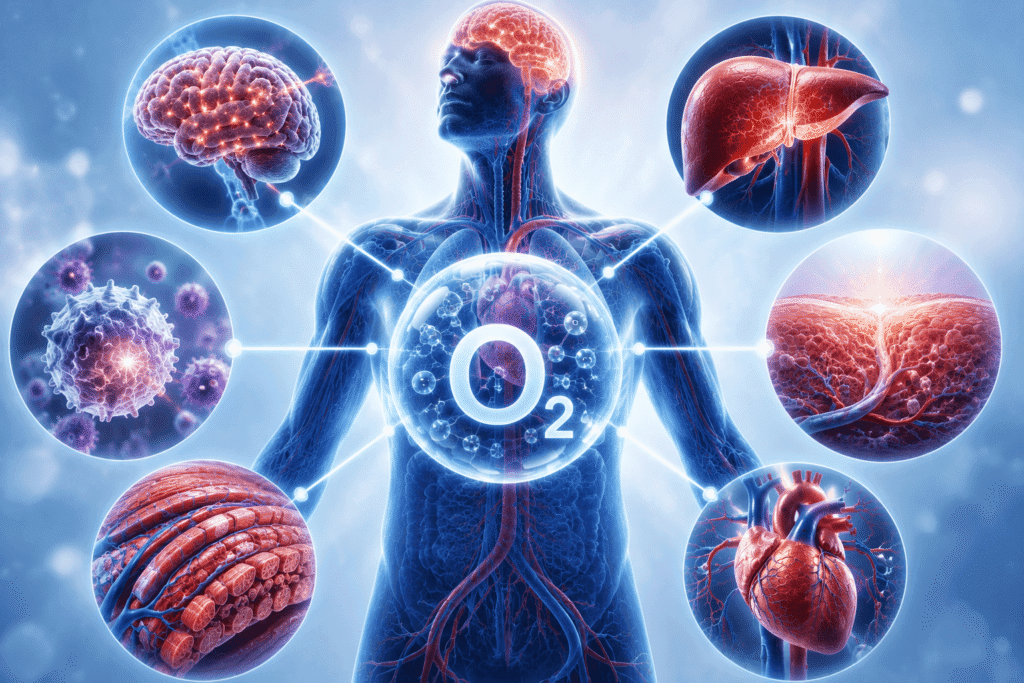
Oxygen is not a passive background gas — it is an active, rate-limiting participant in nearly every important process in the human body: energy production, brain function, the liver’s own detoxification enzymes, immune defense, and tissue repair. Supporting healthy oxygen delivery and cellular oxygen efficiency is one of the most foundational, and best-evidenced, things you can do for long-term organ health.
This article is for educational purposes and is not a substitute for personalized medical advice. If you have concerns about oxygen levels, fatigue, or organ function, talk to a licensed physician.
Source list (for reference)
- NCBI StatPearls — Biochemistry, Anaerobic Glycolysis: https://www.ncbi.nlm.nih.gov/books/NBK546695/
- Journal of Biological Chemistry — Quantifying intracellular rates of glycolytic and oxidative ATP production: https://www.jbc.org/article/S0021-9258(20)42908-4/fulltext
- Brain Energy and Oxygen Metabolism (PMC): https://pmc.ncbi.nlm.nih.gov/articles/PMC6023993/
- ScienceDirect — Brain Oxygen Consumption overview: https://www.sciencedirect.com/topics/medicine-and-dentistry/brain-oxygen-consumption
- MRI estimation of global brain oxygen consumption rate (PMC): https://pmc.ncbi.nlm.nih.gov/articles/PMC2949253/
- Vulnerability of the developing brain to hypoxic-ischemic damage (PMC): https://www.ncbi.nlm.nih.gov/pmc/articles/PMC3493883/
- Zonation, Zonation, Zonation: The Real Estate of the Liver (PMC): https://pmc.ncbi.nlm.nih.gov/articles/PMC12879296/
- Frontiers in Pharmacology — Cross-species variability in lobular geometry and CYP zonation: https://www.frontiersin.org/journals/pharmacology/articles/10.3389/fphar.2024.1404938/full
- ScienceDirect — Metabolic zonation of the liver: the oxygen gradient revisited: https://www.sciencedirect.com/science/article/pii/S2213231716304499
- Ischemic Hepatitis (PMC/NIH): https://pmc.ncbi.nlm.nih.gov/articles/PMC5531975/
- Ischemic Hepatitis – Intercorrelated Pathology (PMC): https://pmc.ncbi.nlm.nih.gov/articles/PMC5972787/
- Patterns of necrosis in liver disease (PMC/NIH): https://pmc.ncbi.nlm.nih.gov/articles/PMC6467231/
- The Role of Oxygen in Wound Healing (Human BioSciences): https://humanbiosciences.com/woundcareblog/the-role-of-oxygen-in-wound-healing-how-hyperbaric-therapy-works/
- Topical Oxygen Therapy in Wound Healing: A Narrative Review: https://auctoresonline.org/article/topical-oxygen-therapy-in-wound-healing-a-narrative-review-of-mechanisms-and-modalities
- Nature Index — Oxygen Therapy Applications in Wound Healing: https://www.nature.com/nature-index/topics/l4/oxygen-therapy-applications-in-wound-healing
- The Science Behind Collagen: How It Impacts Wound Healing: https://humanbiosciences.com/woundcareblog/wound-healing-collagen/
- PLOS One — PGC-1α-b increases exercise capacity and peak oxygen uptake: https://journals.plos.org/plosone/article?id=10.1371%2Fjournal.pone.0028290
- Effects of Exercise Training on Mitochondrial and Capillary Growth (PMC systematic review): https://pmc.ncbi.nlm.nih.gov/articles/PMC11787188/
- PubMed 2025 — Impact of exercise on mitochondrial biogenesis (systematic review/meta-analysis): https://pubmed.ncbi.nlm.nih.gov/40459444/
- Cardiovascular Implications of Intermittent Hypoxia (PMC narrative review): https://www.ncbi.nlm.nih.gov/pmc/articles/PMC12712449/
- Impact of Obstructive Sleep Apnea on Cardiovascular Health (PMC systematic review): https://www.ncbi.nlm.nih.gov/pmc/articles/PMC11575733/
- Intermittent hypoxia causes histological kidney damage (PLOS ONE/PMC): https://www.ncbi.nlm.nih.gov/pmc/articles/PMC5794148/
- OSA cytokines and cardiovascular/kidney disease risk (PMC): https://pmc.ncbi.nlm.nih.gov/articles/PMC8006954/
- PGC-1α and exercise-induced mitochondrial biogenesis (PMC): https://www.ncbi.nlm.nih.gov/pmc/articles/PMC3404101/