
Our earlier articles covered why oxygen matters for your brain, liver, and organs, why ATP production is essential for every cell, and the broader evidence-backed benefits of ozone therapy. One of the most actively researched of those benefits deserves its own deeper look: how ozone therapy interacts with the immune system.
This is genuinely one of the more scientifically interesting corners of ozone research — immune cells appear to respond directly to controlled ozone exposure, and the proposed effects touch several different arms of immune function at once.
How Ozone Reaches the Immune System: Major Autohemotherapy
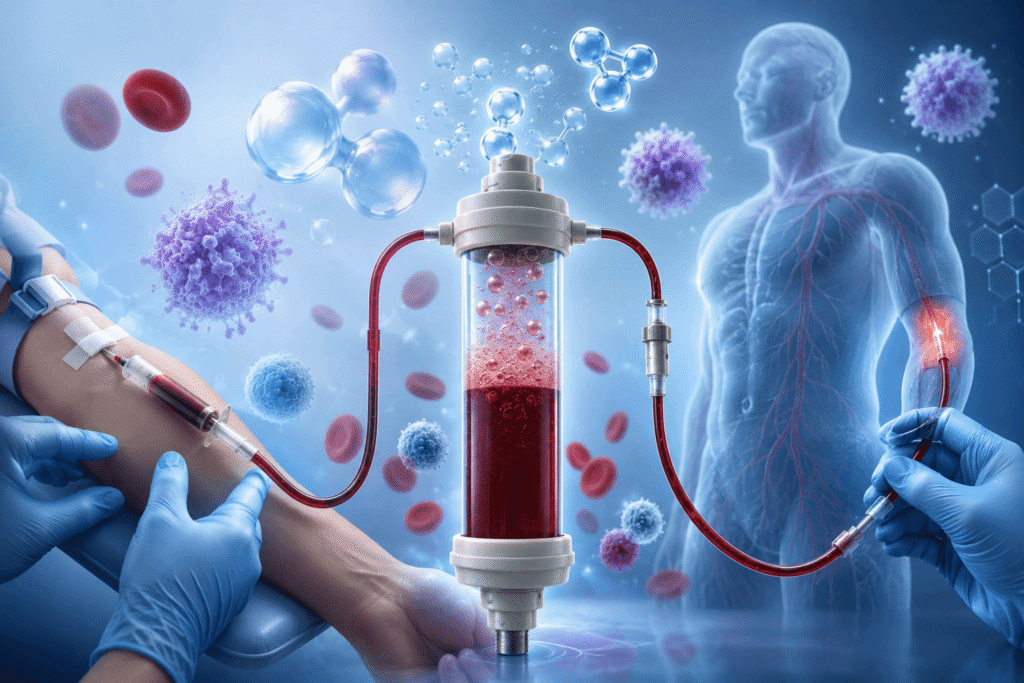
The most-studied delivery method for immune-related ozone therapy is major autohemotherapy (MAH): a small volume of the patient’s own blood is drawn, exposed to a precisely controlled ozone-oxygen mixture, and reinfused (Ozone therapy for skin diseases: cellular and molecular mechanisms, PMC). This technique dates back to the 1960s, when German physician Dr. Hans Wolff first developed it, and was studied extensively through the following decades by researchers in the Soviet Union, Cuba, and Italy (Ozone therapy: Mechanisms and clinical applications — A review, PMC).
During MAH, white blood cells — particularly monocytes and lymphocytes — are directly exposed to the ozone/oxygen mixture before being returned to circulation. Researchers have proposed that this brief, controlled exposure triggers a cascade of immune signaling (Regenerated Health: Ozone Blood Therapy). The therapeutic window matters a great deal here: research on autohemotherapy safety standards places the effective concentration range at roughly 10–80 μg/mL, and notes that the antioxidant system must reach a certain activation threshold to trigger the beneficial cytokine cascade without being overwhelmed by the oxidative signal (PMC10333036).
2. Cytokine Modulation: Calming Inflammation, Not Just Suppressing It

One of the most consistently reported findings across ozone immunology research is its effect on cytokines — the signaling proteins immune cells use to coordinate a response.
A comprehensive review of ozone therapy in musculoskeletal and temporomandibular disorders found that ozone modulates pro-inflammatory cytokine levels as part of its broader effect on chronic inflammatory and immune-overactivation conditions (Oxygen-Ozone Therapy for Reducing Pro-Inflammatory Cytokines, PMC). More broadly, a summary of ozone’s immune effects describes it as generally reducing inflammatory cytokines such as IL-6, IL-1β, and TNF-α, while raising levels of anti-inflammatory and reparative factors including IL-10, IL-4, TGF-β, and VEGF (European Society of Medicine: Ozone Therapy).
A particularly notable dataset comes from research conducted during the COVID-19 pandemic: studies found that systemic ozone administration in COVID-19 patients shortened hospitalization time, reduced proinflammatory cytokines (IL-2, IL-6, IL-8, TNF-α), and simultaneously increased the anti-inflammatory cytokine IL-10 (Ozone as an Immunomodulator, narrative review, PMC).
The oxygen/ATP connection: this two-directional cytokine effect — dialing down what’s overactive while supporting reparative signaling — mirrors the same “moderate oxidative stress activates protective pathways” pattern from our Nrf2/detox discussion in the benefits article. It’s not immune suppression in the way a steroid works; it’s closer to recalibration.
3. Antiviral and Antimicrobial Immune Activity
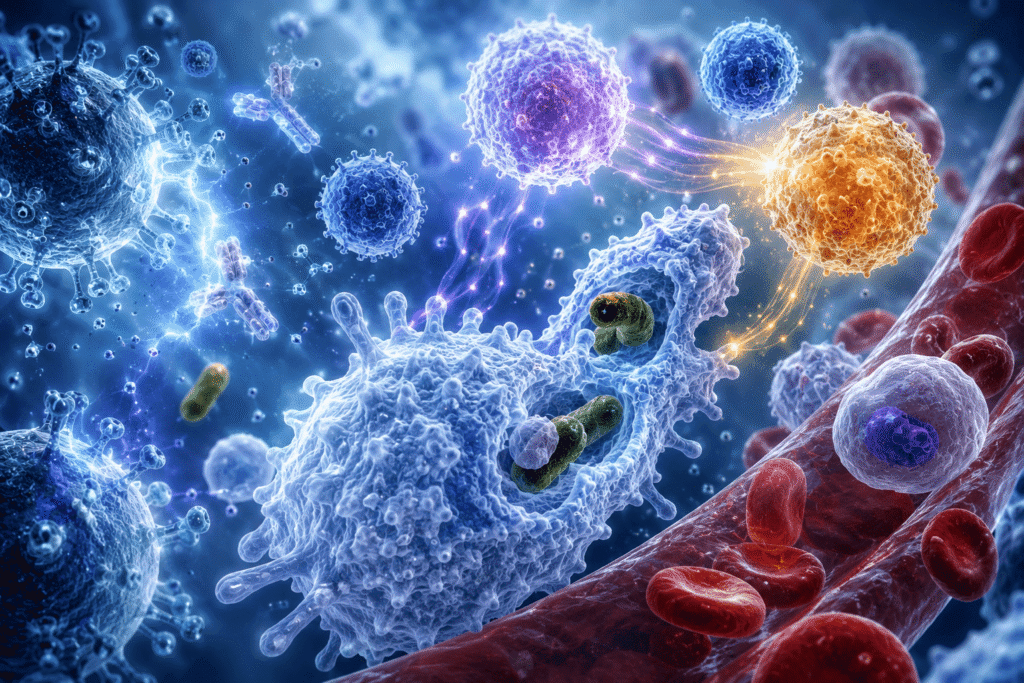
Ozone’s immune effects extend to how the body responds to pathogens directly. Research on ozone autohemotherapy has proposed antiviral mechanisms centered on interferon-gamma (IFN-γ) — a key cytokine that enhances natural killer (NK) cell activity — and interleukin-2 (IL-2), the major proliferative signal for T lymphocytes, both of which appear to increase following controlled ozone exposure of blood (Ozone Autohemotherapy: Possible Mechanisms of Anti-Viral Action, ClinMed Journals). Notably, recombinant forms of both IL-2 and IFN-γ are themselves FDA-approved immune-boosting treatments for certain cancers, which is part of why researchers have taken interest in whether ozone can stimulate the body’s own production of them (ClinMed Journals).
At the local level, ozone also appears to support the immune system’s first line of physical defense: research describes ozone’s effect on macrophage phagocytic activity — the process by which these immune cells physically engulf bacteria and debris — as part of its broader immunomodulatory profile (PMC8910188).
4. Immune Homeostasis in Immunodeficiency and Autoimmune Conditions
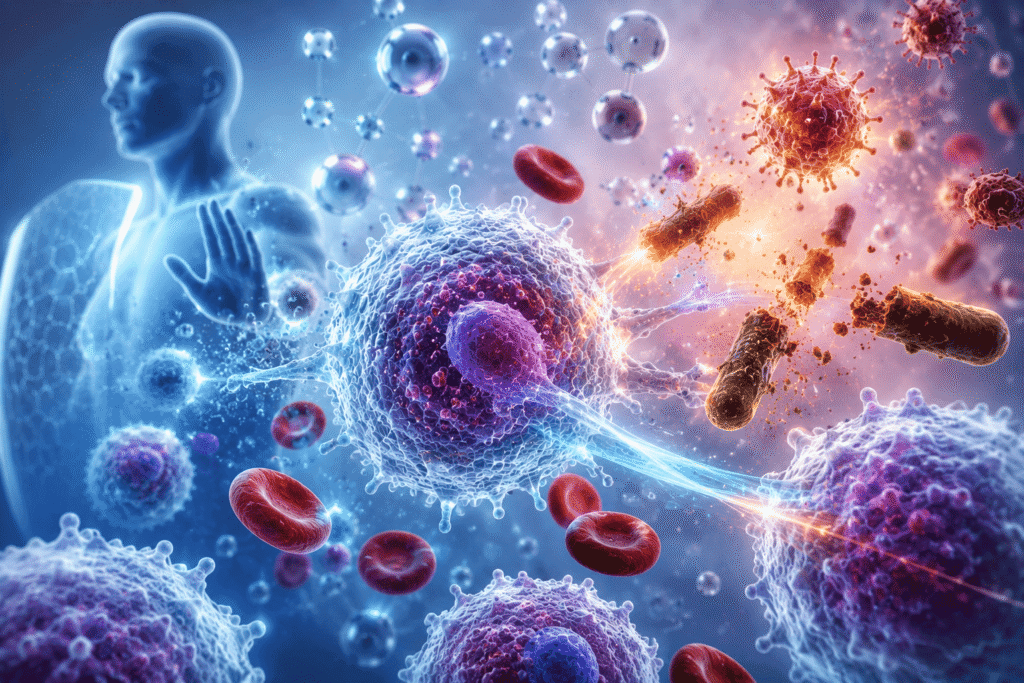
Beyond acute infection response, a 2025 narrative review focused specifically on ozone’s use as an adjunct therapy in immunodeficiency conditions, examining its effects on cytokine modulation, macrophage function, regulatory T cells (Tregs), and NK cell activity (Ozone as an Immunomodulator, PMC). The review’s framing is useful: ozone, in small and precisely controlled doses, appears to induce adaptive cellular processes that enhance antioxidant enzyme activity and regulate cytokine profiles — language that emphasizes regulation and adaptation rather than blunt stimulation (PMC12731440).
This same review also notes systemic ozone therapy has been studied for reducing CRP (a standard clinical marker of inflammation) and lowering rates of infectious complications in patients with immune dysfunction (PMC12731440). Separately, animal research on rectal ozonated water administration found activation of the SIRT1–Nrf2/HO-1 pathway, associated with improved intestinal barrier integrity and modulation of the gut microbiome — an emerging area connecting ozone, gut health, and systemic immune regulation (PMC12731440).
5. Where the Evidence Is Still Developing

In the interest of the same honesty we’ve applied throughout this series: the immunodeficiency review cited above is explicit that there remains a lack of prospective, randomized, placebo-controlled trials that can conclusively confirm ozone’s immune effects or establish optimal protocols (PMC12731440). The same review calls for more standardized use of biomarkers — cytokine profiles, redox balance markers like the GSH/GSSG ratio, and antioxidant enzyme activity — to objectively evaluate outcomes going forward (PMC12731440).
In plain terms: the mechanistic and observational research on ozone’s immune effects is genuinely substantial and growing, but it is not yet at the level of large, definitive randomized controlled trials for most immune-related applications. That places this area in a similar evidence category to the wound-healing and antioxidant/detox benefits covered in our previous article — promising and mechanistically grounded, but still maturing.
6. Safety Reminder

As with every application in this series, dose and administration technique are central to safety. Reported adverse effects with ozone blood therapy include local injection-site reactions, a sensation of heaviness that resolves quickly, and — with incorrect administration technique — more serious events including vagal reactions and, in rare cases documented in the literature, death (Oxygen-Ozone Therapy for Reducing Pro-Inflammatory Cytokines, PMC). This reinforces the point made in our main ozone benefits article: ozone therapy should only be performed by a qualified, experienced provider using validated dosing protocols.
The Bottom Line

Ozone therapy’s interaction with the immune system is one of the more mechanistically rich areas of ozone research: controlled exposure of blood to ozone appears to modulate cytokine signaling, support antiviral immune pathways, and influence macrophage and NK cell activity — effects that researchers increasingly frame as immune recalibration rather than simple stimulation or suppression. That framing connects naturally to the oxidative-signaling story running through this entire series: a precisely controlled dose of a reactive molecule prompting the body’s own regulatory systems to respond, rather than the molecule “doing the work” directly.
This article is for educational purposes and is not a substitute for personalized medical advice. Talk with a licensed physician about whether ozone therapy is appropriate for your specific immune or health condition.
Source list (for reference)
- PMC — Ozone therapy for skin diseases: Cellular and molecular mechanisms: https://pmc.ncbi.nlm.nih.gov/articles/PMC10333036/
- PMC — Ozone therapy: Mechanisms and clinical applications, a review: https://pmc.ncbi.nlm.nih.gov/articles/PMC12744443/
- Regenerated Health — Ozone Blood Therapy (MAH): https://regenerated.health/ozone-blood-therapy/
- PMC — Oxygen-Ozone Therapy for Reducing Pro-Inflammatory Cytokines in Musculoskeletal and TMD: https://www.ncbi.nlm.nih.gov/pmc/articles/PMC8910188/
- European Society of Medicine — Ozone Therapy: A Breakthrough in Medical Treatments: https://esmed.org/ozone-therapy-a-breakthrough-in-medical-treatments/
- PMC — Ozone as an Immunomodulator, narrative review on immunodeficiencies (2025): https://pmc.ncbi.nlm.nih.gov/articles/PMC12731440/
- ClinMed Journals — Ozone Autohemotherapy: Possible Mechanisms of Anti-Viral Action: https://clinmedjournals.org/articles/jide/journal-of-infectious-diseases-and-epidemiology-jide-6-117.php?jid=jide
- PMC — The Oxygen–Ozone Adjunct Medical Treatment According to Italian Scientific Society Protocols: https://pmc.ncbi.nlm.nih.gov/articles/PMC10740843/