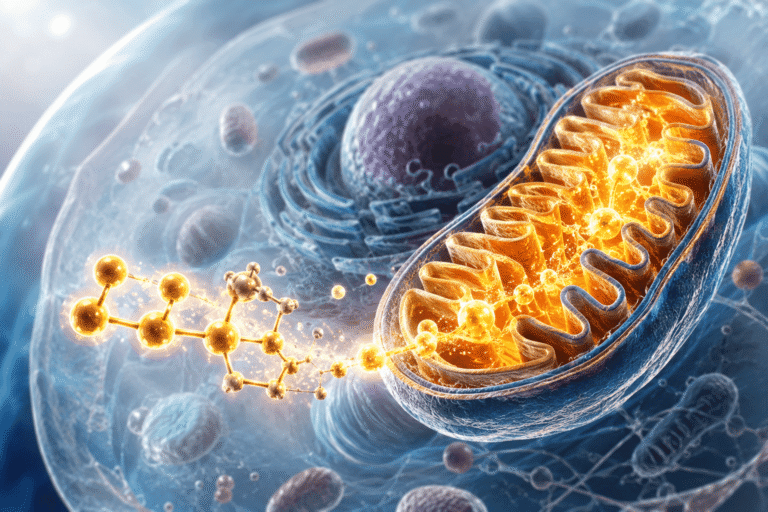
If you’ve read our articles on why oxygen is essential to your brain, liver, and organs and why ATP production matters for every cell, you already know that oxygen delivery, mitochondrial function, and ATP output sit underneath almost every important process in the body — energy production, immune defense, tissue repair, and the liver’s own detoxification enzymes. Ozone therapy builds directly on that foundation. Ozone (O₃) is oxygen’s more reactive cousin — three oxygen atoms instead of two — and medical use of it is built around leveraging that extra reactivity in a controlled, therapeutic way (Cleveland Clinic: Ozone Therapy).
Here’s what the clinical and mechanistic research shows about ozone therapy’s benefits, and how each one connects back to the oxygen-dependent biology already covered in our first article.
Pain Relief and Disc Healing
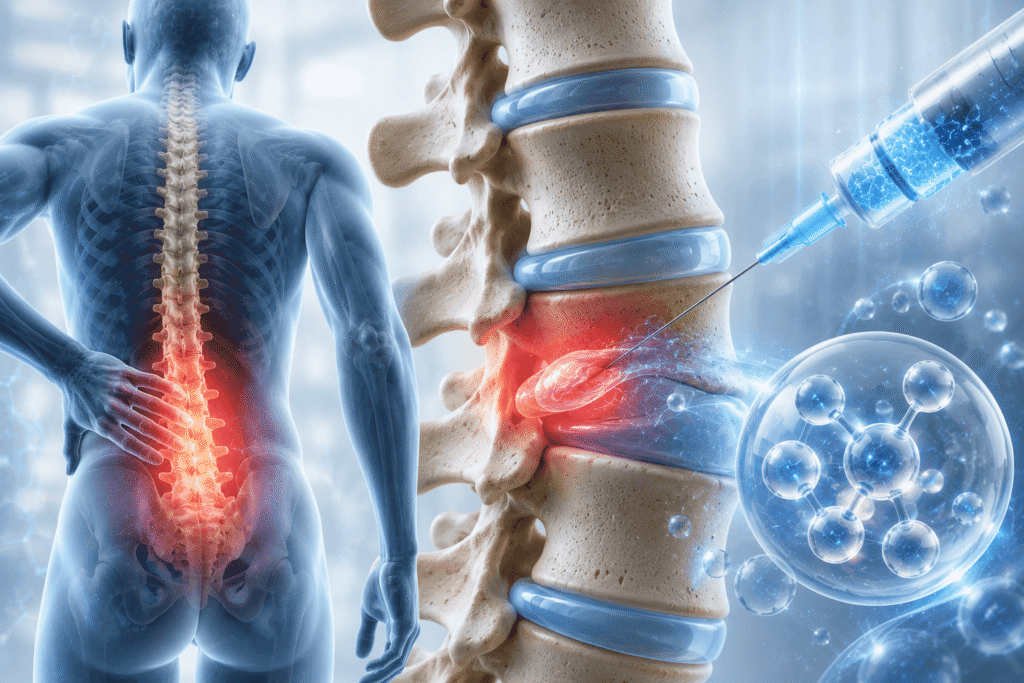
The strongest clinical evidence for ozone therapy is in treating chronic low back pain from disc herniation. A systematic review and meta-analysis of randomized controlled trials published in Pain Physician found that percutaneous ozone injection — delivered directly into or near the disc — produced positive pain relief outcomes with low complication rates (PubMed). A more recent 2024 systematic review reached similarly favorable conclusions (SAGE Journals), and a randomized controlled trial published in The Spine Journal even compared intradiscal oxygen-ozone injection directly against microdiscectomy surgery, positioning it as a legitimate minimally invasive alternative for appropriate candidates (ScienceDirect).
The oxygen connection: disc tissue is naturally one of the least-oxygenated tissues in the body, and painful, degenerating discs are associated with poor local oxygen and nutrient supply. This is the same organ-level principle from our oxygen article — tissues at the edge of the body’s oxygen supply are the ones most vulnerable to dysfunction, whether that’s the liver’s pericentral zone or an intervertebral disc.
Wound Healing Support

Ozone therapy has shown adjunctive benefit for diabetic foot ulcers and other chronic wounds across multiple systematic reviews. A 2022 review found improved healing rates when ozone was added to standard wound care (Research, Society and Development), a 2024 systematic review and meta-analysis reached comparable conclusions (PubMed), and a 2023 peer-reviewed review summarized similar results across several small trials, including reduced bacterial counts and accelerated wound closure (PMC).
The oxygen connection: this dovetails directly with the wound-healing section of our first article — oxygen is required for collagen synthesis, fibroblast activity, and the neutrophil “respiratory burst” that clears bacteria from a wound. Chronic wounds are frequently oxygen-starved tissue, and part of the working hypothesis for ozone’s benefit here is that it helps stimulate growth factors (VEGF, TGF-β, PDGF) involved in rebuilding blood supply to the area (PMC: ozone for chronic wounds, protocol).
Activating the Body’s Own Antioxidant and Detox Enzyme Systems

This is the benefit most directly tied to our earlier discussion of liver detoxification. Controlled, low-dose ozone appears to trigger a mild, transient oxidative signal that activates a cellular pathway called Nrf2 (PMC: Role of Nrf2 in Antioxidant Response to Medical Ozone). Once active, Nrf2 switches on genes for antioxidant enzymes and Phase II detoxification enzymes — the very same conjugation machinery our first article described the liver using to process and clear toxins (Medical Gas Research/Springer: Mechanisms of Action in Ozone Therapy).
In a study of multiple sclerosis patients, ozone administered by rectal insufflation measurably increased Nrf2 activity and reduced markers of oxidative stress and inflammation (ScienceDirect, 2017). Research on ozone alongside chemotherapy has proposed a similar mechanism for helping protect the heart, liver, and kidneys from treatment-related oxidative damage (PMC: Ozone and Chemotherapy-Induced Toxicity).
The oxygen connection: our first article explained that the liver’s Phase I and Phase II detox pathways depend on adequate oxygen delivery to function efficiently. The proposed benefit of ozone here is narrower and more precise than a generic “detox” claim — it’s the idea that a carefully dosed oxidative signal may help activate the body’s own enzymatic detox systems, the same systems already dependent on healthy oxygen delivery.
Circulatory and Vascular Support
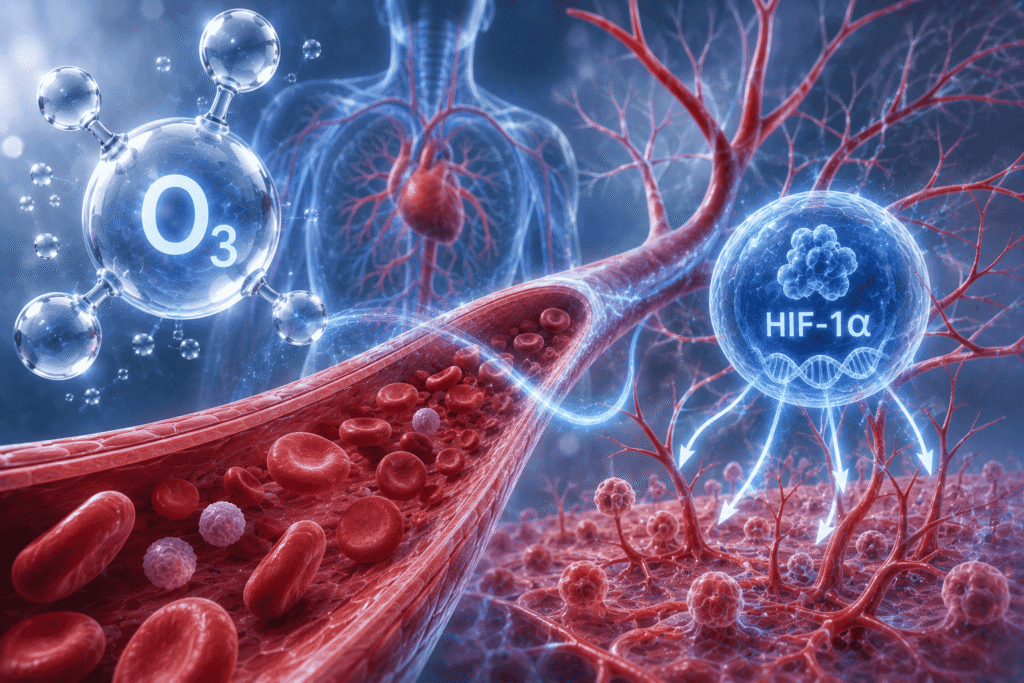
Ozone’s effects on oxidative signaling have also been linked to activation of hypoxia-inducible factor‑1α (HIF‑1α), a transcription factor involved in the body’s response to low-oxygen conditions and in stimulating new blood vessel formation (PMC: Mechanisms of Action Involved in Ozone Therapy).
The oxygen connection: HIF-1α is one of the body’s central oxygen-sensing systems — it’s the same pathway your body uses to adapt to altitude, exercise training, and other conditions where oxygen delivery is a limiting factor, echoing the exercise/mitochondrial adaptation section from our first article.
How Ozone May Influence ATP Production (A More Complicated Picture)
If you’ve read our article on why ATP production matters for every cell, you know that ATP output depends on healthy mitochondrial function and an intact electron transport chain. Ozone’s relationship to ATP production is one of the more scientifically interesting — and more dose-sensitive — parts of this whole picture, so it’s worth walking through honestly rather than simplifying it into a one-directional “benefit.”
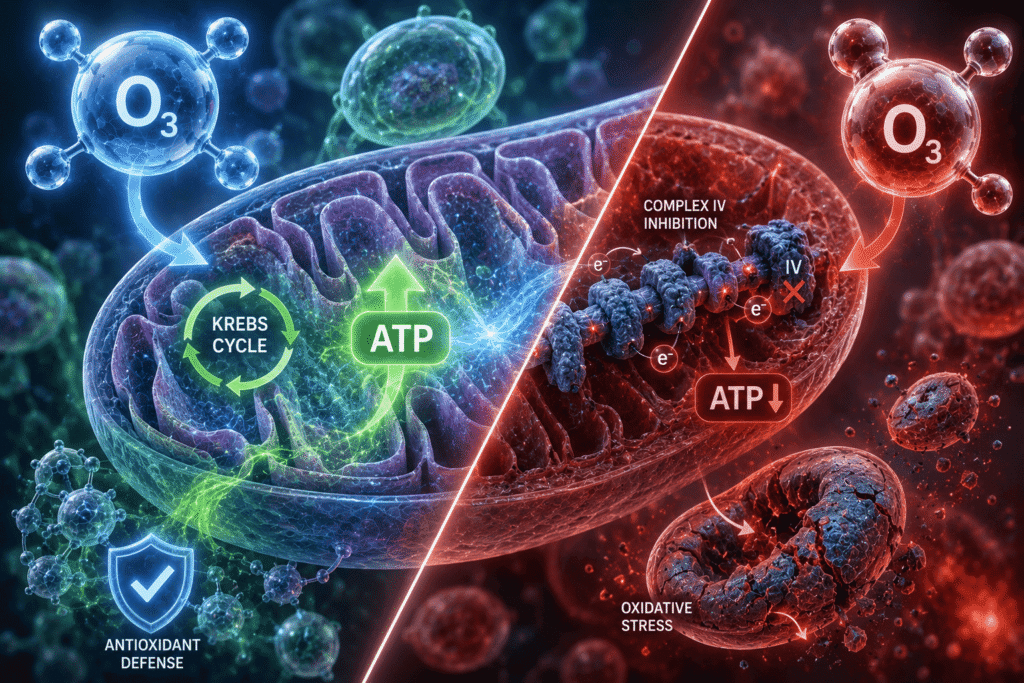
The proposed benefit, at controlled therapeutic doses: Some research suggests that ozone exposure, within a specific low-dose range, can stimulate the Krebs cycle and increase oxidative carboxylation of pyruvate, resulting in increased ATP production in liver cells, alongside increased antioxidant enzyme activity (Ozone Exposure Controls Oxidative Stress and Inflammation in Hepatocytes, MDPI systematic review). A broader systematic review on mitochondriopathies similarly frames low-dose medical ozone as a “redox bioregulation” strategy — proposing that a small, controlled oxidative signal can help restore mitochondrial balance in conditions associated with high oxidative stress, such as rheumatoid arthritis, osteoarthritis, and type 2 diabetes (MDPI: Mitochondrial Dysfunction and Redox Bioregulation through Low-Dose Medical Ozone).
The other side of the dose-response curve: The same body of research is very clear that this relationship is not linear, and that it can reverse entirely at higher concentrations. One frequently cited study found that ozone treatment at certain concentrations decreased ATP levels, increased markers of mitochondrial stress, and inhibited the activity of respiratory chain complexes — most notably complex IV (cytochrome-c-oxidase), through a mechanism involving direct interaction with iron-sulfur clusters in the respiratory complexes, similar to how certain toxic gases interfere with oxygen-carrying proteins (The Role of Mitochondria in Ozone Therapy). A separate review focused on environmental ozone exposure (inhaled ozone, as an air pollutant rather than a controlled therapeutic dose) describes a “vicious cycle” in which ozone-induced oxidative stress damages mitochondrial DNA and structure, reducing rather than enhancing cellular energy output (ScienceDirect: Mechanisms underlying mitochondrial damage by ozone).
What this actually means: The research community’s own summary of this is that ozone’s effect on mitochondria — and therefore on ATP production — depends heavily on concentration, duration of exposure, and route of administration. As one mouse-liver study put it plainly: “the impact of ozone concentration is not linear: very low concentrations may yield no effect, while excessively high concentrations may result in outcomes opposite to those seen with moderate or low concentrations” (ScienceDirect: Impact of Ozone Therapy on Mouse Liver Mitochondrial Function).
Bottom line for this section: there is legitimate research suggesting that carefully dosed medical ozone may stimulate ATP production and mitochondrial antioxidant capacity in specific contexts. There is equally legitimate research showing that ozone can impair the electron transport chain and reduce ATP output when the dose, concentration, or exposure route falls outside that narrow therapeutic window. This is precisely why ozone therapy protocols emphasize precise dosing administered by an experienced provider — the same molecule that may support mitochondrial function at one concentration can measurably harm it at another.
A Narrow, Specific Surgical Indication
For chronic radiation proctitis — a side effect of pelvic radiation therapy for cancer — ozone therapy has received a low-strength (grade 1C) recommendation from the American Society of Colon and Rectal Surgeons, reflecting a specific, well-defined use case rather than a broad endorsement (summarized here).
Safety and Regulatory Notes (Please Read)

Ozone is a reactive oxidizing molecule, and dose matters. The U.S. FDA has classified ozone as a toxic gas with no approved medical use since 1976 (Cleveland Clinic; Medical News Today), meaning no ozone-generating device is currently FDA-approved for therapeutic use, even though many of the applications above have real supporting research. Documented risks include gas embolism, pulmonary irritation if inhaled, and — in rare, serious cases — neurological complications including stroke (PMC case report, 2025). The research above also shows that benefit is dose-dependent: higher doses shift ozone from a mild, protective oxidative signal into a harmful one (PMC6720777).
This is why ozone therapy should only be administered by a qualified, experienced provider using appropriate dosing and delivery methods, and why it’s worth discussing your specific health history and goals before starting treatment.
This article is for educational purposes and is not a substitute for personalized medical advice. Talk with a licensed physician about whether ozone therapy is appropriate for your specific situation.